Img source: https://x.com/Archaeology_Mag/status/1948095918349144381/photo/1
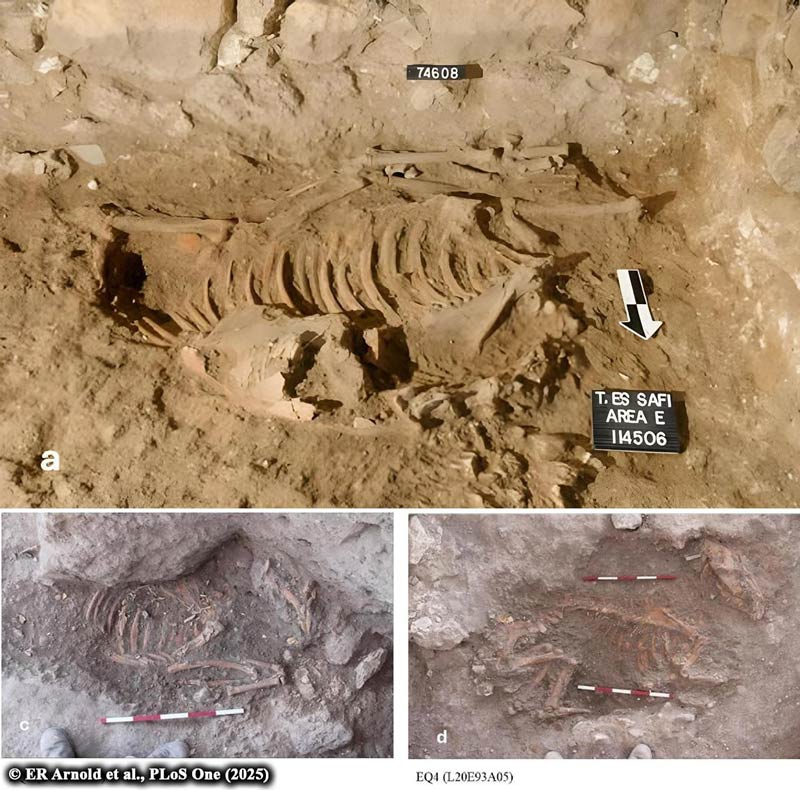
A study published in PLOS One (see here) reveals that four female donkeys, ritually buried around 2900–2600/2550 BC at Tell es-Safi/Gath, originated in Egypt. Unearthed in shallow pit graves beneath building floors, one donkey had its head severed and placed on its abdomen, while the others were intact, all facing east. Isotope analysis of their teeth (strontium, carbon, oxygen) showed they consumed Nile Valley plants, not local vegetation, indicating trade between Egypt and Canaan during the Early Bronze Age III. These donkeys, about five years old and in prime breeding condition, were valuable, suggesting their burial was a significant ritual act. This discovery aligns with biblical accounts of early trade networks in the region, such as those implied in Genesis 12:16, where livestock, including donkeys, were part of Abraham’s wealth in Egypt.
Sources:
- Bible Archaeology: New Study Reveals That Four Donkeys Ritually Buried at Tell es-Safi/Gath Came from Egypt
https://www.timesofisrael.com/donkey-bone-study-unlocks-how-canaanites-hauled-ass-from-egypt-4700-years-ago/
- Israel Antiquities Authority: Ancient Craft House for Copper Production Uncovered in Kiryat Gat – The First Discovered in Southern Israel
https://journals.plos.org/plosone/article?id=10.1371/journal.pone.0326421