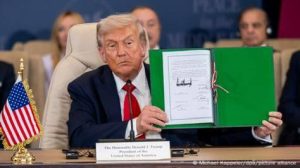
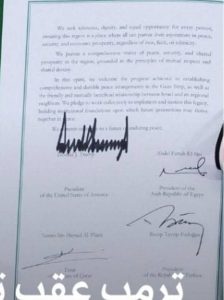
Sharm el-Sheikh, Egypt – On October 14, 2025, a landmark document was signed by U.S. President Donald Trump, Egyptian President Abdel Fattah el-Sisi, Qatari Emir Tamim bin Hamad Al Thani, and Turkish President Recep Tayyip Erdoğan, pledging a “future of sustainable peace” in the Middle East. The agreement, signed during a high-level summit, calls for “tolerance, respect, and equal opportunity for every individual” and aims to ensure “peace, security, and economic prosperity” regardless of race, religion, or ethnic origin. It welcomes progress in Gaza’s ceasefire and strengthened ties between Israel and its neighbors, committing to a “comprehensive vision of peace” and a “shared destiny.”
The document, hailed as a step toward ending the two-year conflict that has claimed over 41,000 lives in Gaza, emphasizes mutual respect and cooperation. However, it notably omits any mention of a Palestinian state, drawing criticism from observers who argue it sidesteps a core issue of the Israeli-Palestinian conflict. The agreement follows the release of 48 hostages and Israel’s partial withdrawal from Gaza, facilitated by mediators from Qatar, Egypt, and Turkey.
While the signatories pledge to build foundations for future generations, the absence of Palestinian statehood raises questions about the deal’s long-term viability. Hamas’s recent violence in Gaza’s Sabra neighborhood and their refusal to disarm further complicate implementation. The summit, overshadowed by the tragic deaths of three Qatari diplomats in a car crash, underscored the high stakes of the peace process.