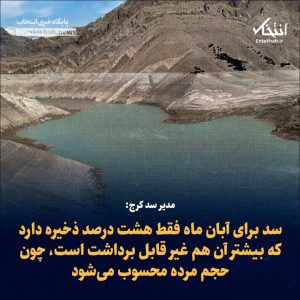
Tehran – Iran’s Karaj Dam, a critical water source for the capital and surrounding areas, is facing an unprecedented crisis, with reservoirs holding just 8% capacity as of November 2025—most of which is “dead volume” unusable for extraction. The manager of the dam, part of the Tehran Province Water Resources Company, warned that this dire situation stems from years of poor water management, including over-extraction for urban use and agriculture, exacerbated by prolonged droughts and climate change.
Experts from the Iranian Water Resources Management Company attribute the depletion to systemic failures: inefficient irrigation in agriculture, which consumes 90% of Iran’s water, and urban sprawl in Tehran, home to 15 million, straining supplies. As the dam nears functional loss, Alborz Province faces a severe drinking water shortage, potential agricultural collapse, and environmental catastrophe, including ecosystem damage and groundwater depletion. Residents in Karaj and Nazarabad have already experienced rationing, with daily cuts of up to 50% in some areas.
The crisis highlights Iran’s broader water woes, where 80% of dams operate below 30% capacity amid economic sanctions limiting infrastructure upgrades. Government officials promise emergency measures, but critics call for long-term reforms like modern irrigation and conservation. Without action, the fallout could trigger mass migration and social unrest